REVIEW · ALGARVE
Faro Bike Tour through the Beautiful Ria Formosa
Book on GetYourGuide →Operated by Formosamar · Bookable on GetYourGuide
If you like animals and bikes, this works. The Ria Formosa is a protected wetland system in Portugal’s Algarve, and you’ll see why it earned a spot among Portugal’s Seven Natural Wonders while pedaling through it.
What I liked most: you stop at the saltpans for real birdwatching, including a flamingo moment with binoculars handed over by your guide. And at the end, you roll into Praia de Faro, where you get downtime for a cold drink and even a swim in the calm blue water.
One heads-up: the ride is not a paved-stroll bike tour. Some parts can feel rough, with sand and uneven ground, so you’ll want comfortable shoes and a bit of steady-balance confidence.
In This Review
- Key highlights you should care about
- Entering the Ria Formosa by bike (the smartest way to move)
- Getting started at Pure Nature Store in Faro
- Saltpans and flamingos: where the trip gets real
- A small expectation check
- Marshlands and channels: the bike ride becomes a lesson
- Praia de Faro: the payoff stop for a break and a swim
- Price and what you truly get for $58
- Guides matter: Carlos, Pedro, and the language reality
- How hard is the ride, really
- What to bring so you don’t cook on a coastal route
- Who should book this Faro bike tour
- Should you book the Faro Bike Tour through the Ria Formosa?
- FAQ
- Where is the meeting point for the tour in Faro?
- How long is the Faro bike tour, and how large are the groups?
- What languages do the guides speak?
- What’s included in the $58 price, and what isn’t?
- What should I bring, and is it wheelchair-friendly or are pets allowed?
- Is there free cancellation?
Key highlights you should care about
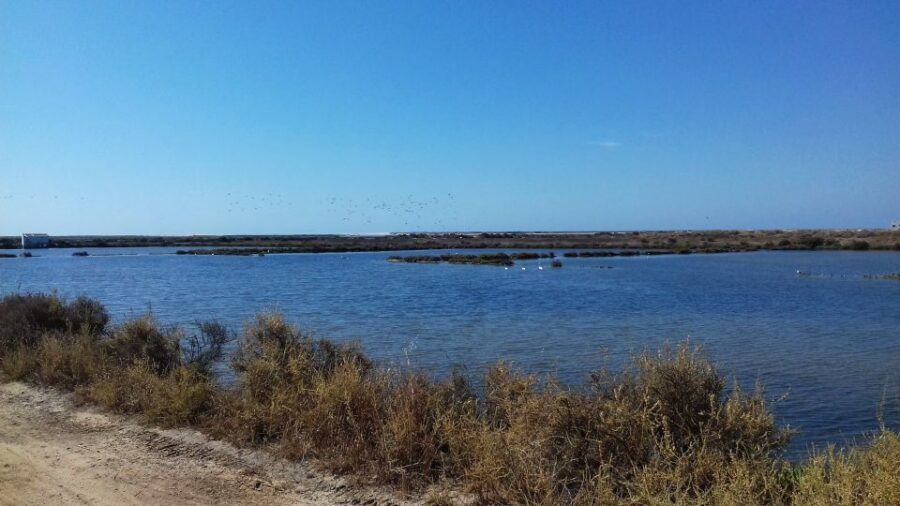
- Saltpan birdwatching with binocular time and a chance at flamingos
- Marshlands by bike so you understand how channels and small islets shape the wetland
- Praia de Faro stop for a break, drink, and a possible swim
- Small group (up to 10) with live guide commentary
- Expert-led route through protected areas where wildlife still runs the show
Entering the Ria Formosa by bike (the smartest way to move)
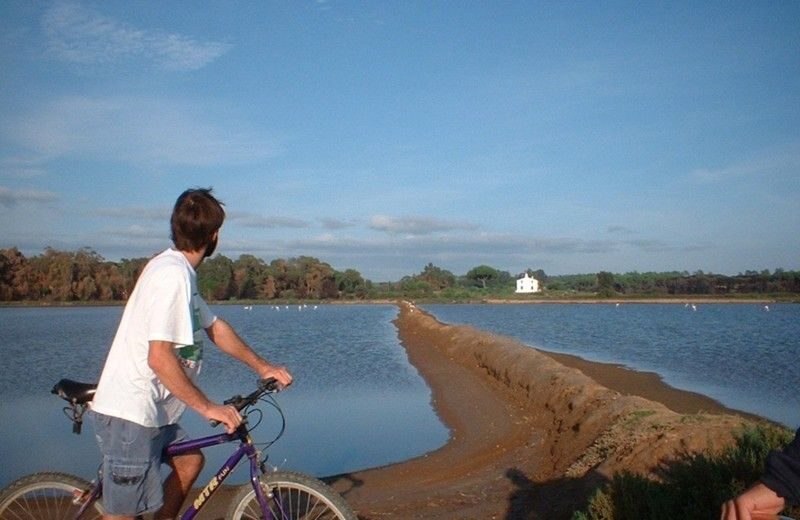
Faro is a solid base in the Algarve, but the real action is outside town in the Ria Formosa wetlands. This tour is built around the idea that you learn faster when you move. On a bike, you can cover ground without rushing, and you’re close enough to notice the details that you’d miss standing still.
The Ria Formosa is protected for a reason: it’s where land, water, and salt create a living system. That’s why the tour’s rhythm matters. You don’t just ride past places; you stop where the ecology shows itself—saltpans first, then marsh channels, then the sandy beachfront at Praia de Faro. Each section answers a different question: how salt gets used, how birds find food, how the channels shape the habitat.
And since this is a small-group format, you tend to get more than a rapid slideshow. You’ll hear live commentary as you go, and you can ask questions when your guide clocks your curiosity.
Other ria formosa tours we've reviewed in Algarve
Getting started at Pure Nature Store in Faro
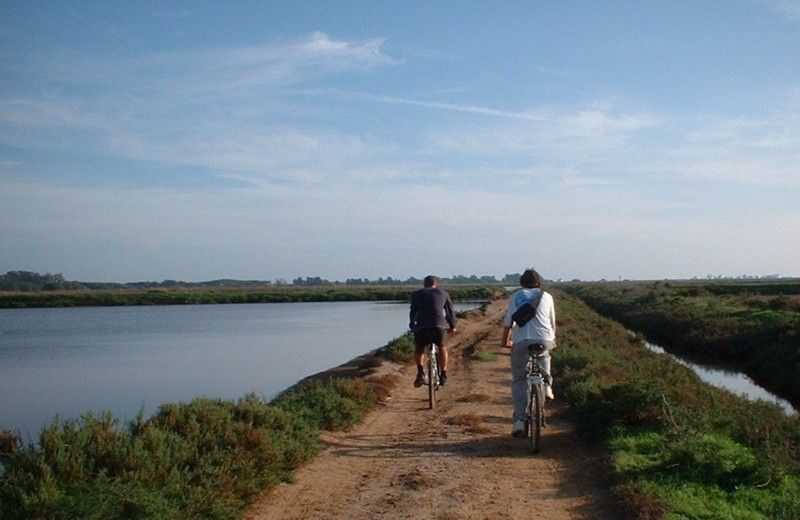
The meeting point is the Formosamar Pure Nature Store, ground floor, inside the Ginásio Clube Naval de Faro (Nautical Club of Faro) building. It’s on the Doca de Recreio de Faro area, address listed as: Passeio Abu São Ibn Harune, Doca de Recreio de Faro, 8000-541 Faro.
Plan to check in at least 10 minutes before departure. This matters because you’re doing a bike tour with safety equipment and group management, and you’ll want to leave on time—especially if you’re trying to align with morning light for wildlife.
Also note the practical stuff: there’s no hotel pickup or drop-off. So you’ll want an easy way to get to the meeting point on your own (taxi, walking if you’re close, or whatever transport you’re already using in Faro).
Saltpans and flamingos: where the trip gets real
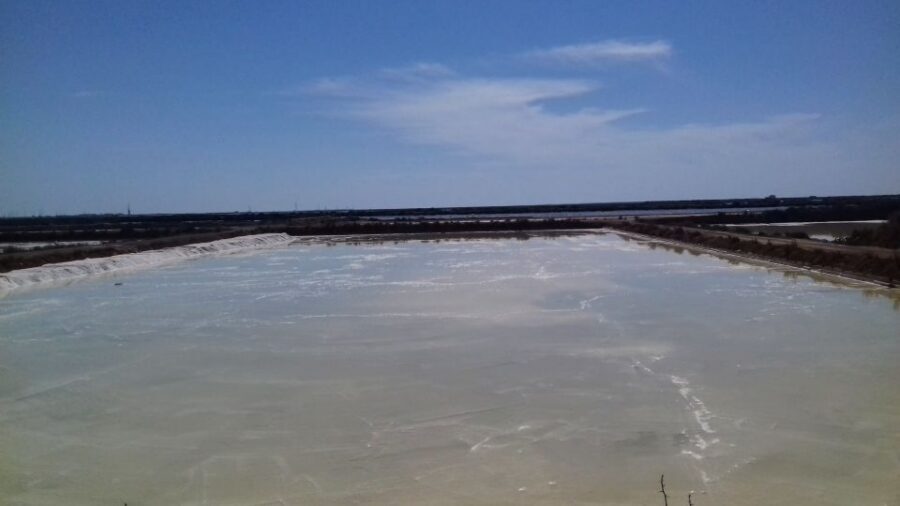
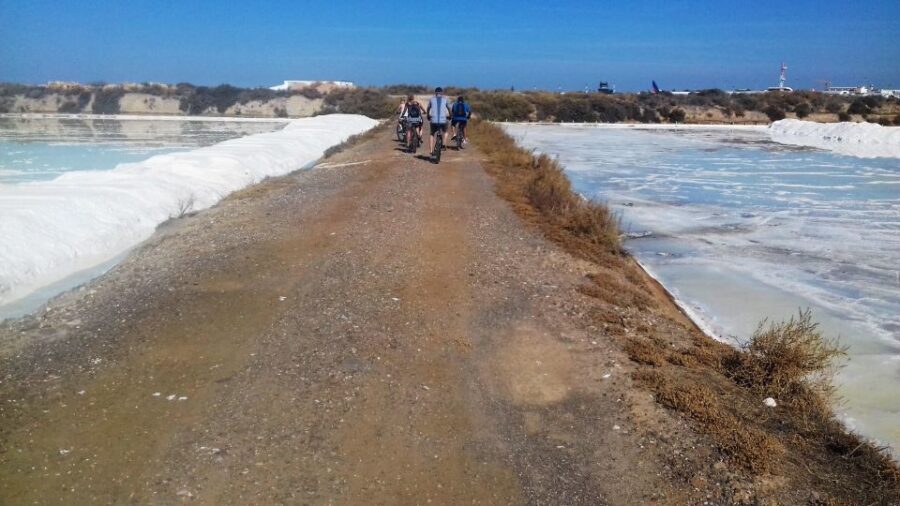
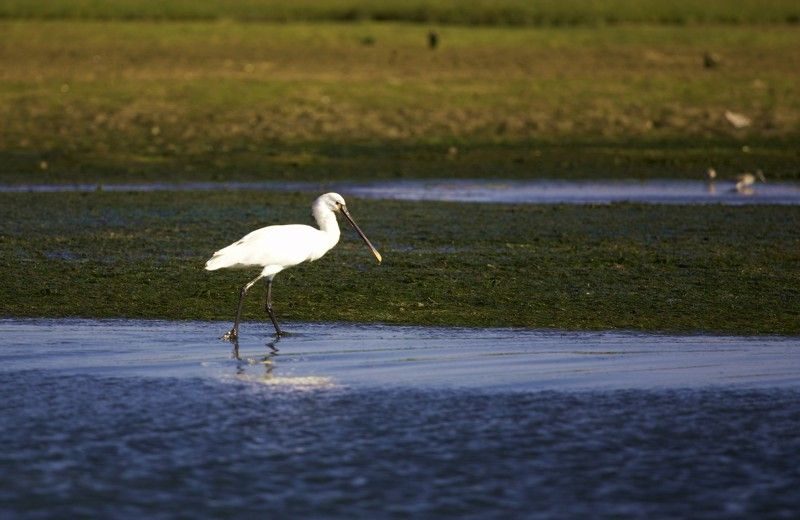
The first big learning stop is the saltpans. This is where the Ria Formosa shows you one of its most important jobs: creating salt-producing environments that also become feeding zones for birds.
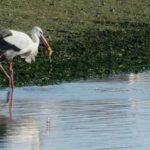
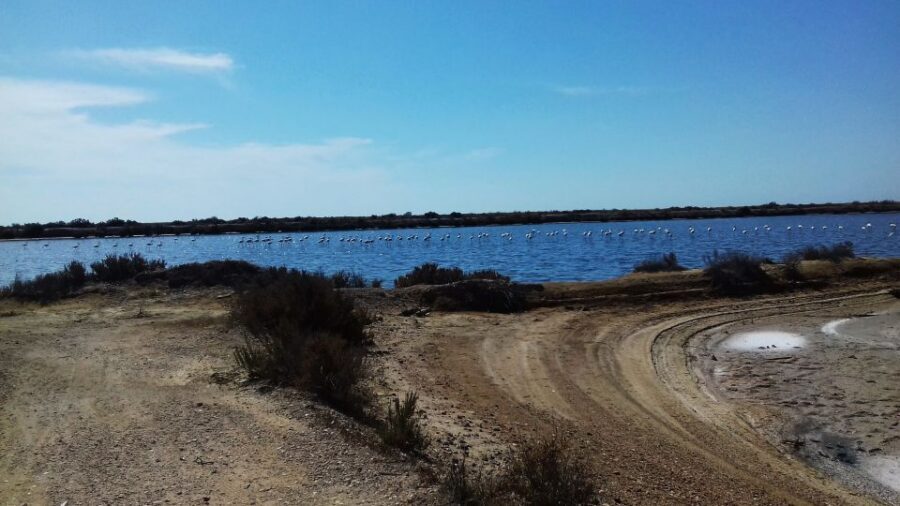
You’ll get a guided birdwatching moment, and you’ll do it properly. Binoculars come into play, and your guide helps you interpret what you’re seeing—where birds gather, how the saltpan structure influences food and shelter, and why this area stays valuable even though it’s man-shaped in places.
This is one of the tour’s biggest reasons to book. A lot of bike tours in coastal towns focus on views. Here, you’re looking at the logic of a working ecosystem. If you care about seeing birds rather than just photographing scenery, this is the segment that delivers.
A small expectation check
Wildlife isn’t a theme-park schedule. You might see flamingos at the saltpans, and you might see other birds that match the conditions that day. Either way, you’ll understand what’s going on once your guide explains the habitat cues.
Marshlands and channels: the bike ride becomes a lesson
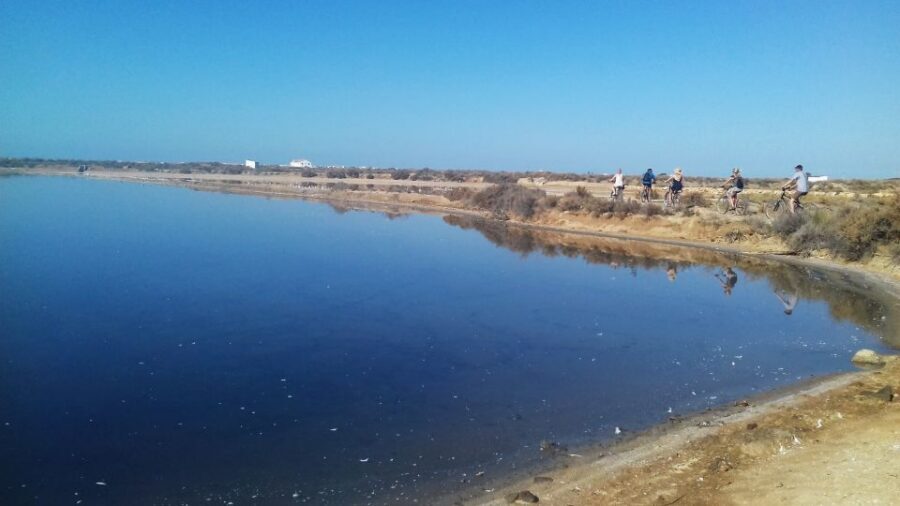
After the saltpans, you pedal into the marshlands. This part of the route is where the Ria Formosa becomes less about one feature and more about the system itself.
Here’s what you’re learning to notice:
- Channels that move water through the wetland
- Small islets that break up the habitat
- Wet ground textures and water edges that change what birds can access
You’ll get a sense of how the habitat functions as a network rather than a single place. It’s the difference between seeing a postcard and understanding why the postcard exists.
This segment is also the reason you should prepare for a slightly more physical ride. Some portions can be sandy or uneven, and the route is still about getting you close to the real habitat—not about giving you a flat, smooth “easy mode” cycle path.
If you’re comfortable walking on uneven ground and you can ride carefully at a steady pace, you’ll be fine.
Other faro tours we've reviewed in Algarve

Praia de Faro: the payoff stop for a break and a swim
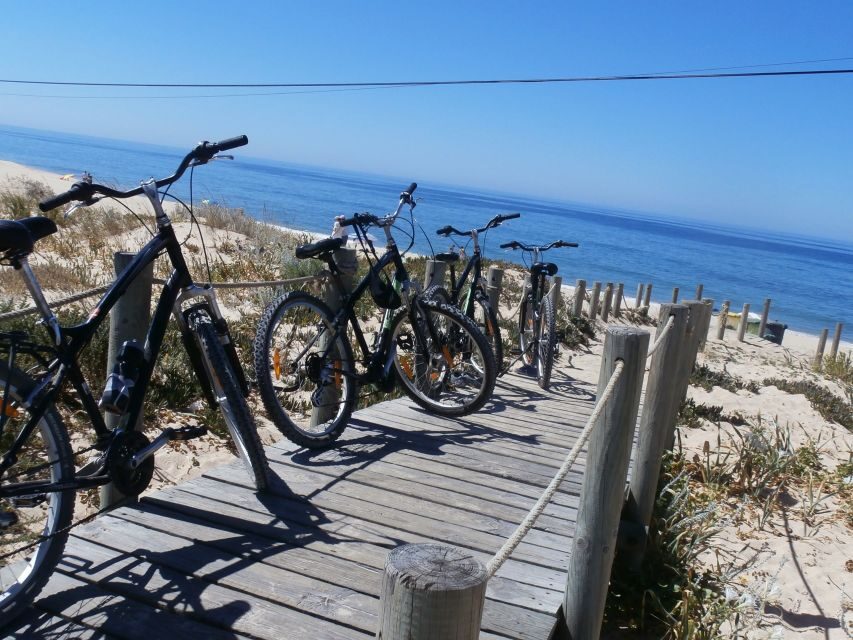
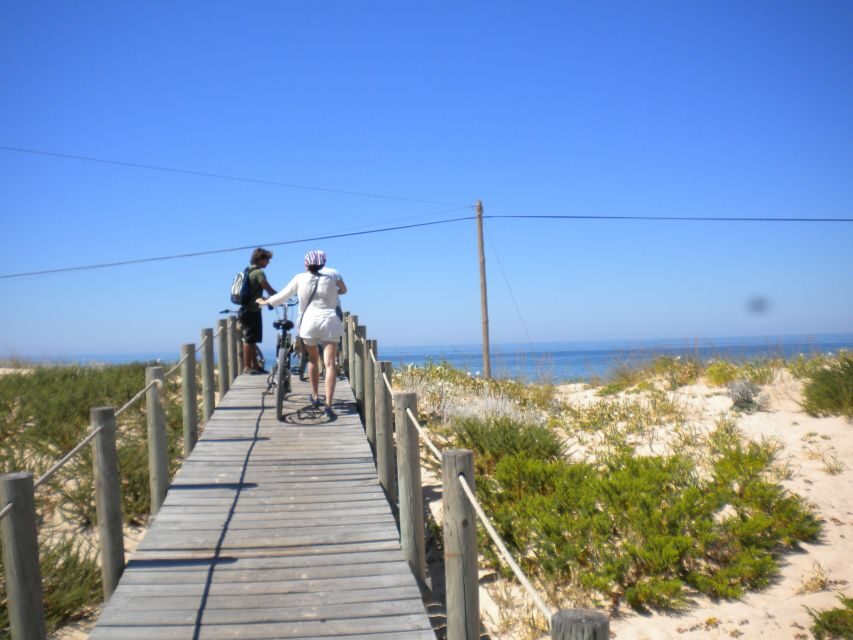
Eventually you roll into Praia de Faro, also called Faro Beach. This is your decompression moment after saltpans and marsh channels, and it’s a smart design choice.
You get time to relax on the beach, enjoy a refreshing drink, and decide whether you want to swim. When conditions are right, the water feels inviting enough to make the whole 3 hours worthwhile. Even if you skip the swim, the beach break resets your energy and lets you enjoy what you just learned instead of rushing through it.
One practical note: the tour description suggests drinks are part of the stop experience, but food and drinks are not listed as fully included overall. So I’d treat the tour as supplying a refreshment during the beach break, while planning to buy extra snacks/drinks if you need more than that.
Price and what you truly get for $58
The price is $58 per person for a 3-hour tour. For the time involved, that sounds a little high if you compare it to city bike rentals. But it stacks up better when you factor in what’s actually included.
You get:
- the bike and safety equipment
- a local guide with live commentary
- access to protected areas where interpretation matters
That’s the value piece. You’re not just renting wheels; you’re paying for explanation, for a route that connects saltpans to marsh habitat, and for help spotting wildlife.
You don’t get:
- hotel pickup/drop-off
- food and drinks as a full package
- any extras beyond what’s specified
So the best value is for people who show up ready to ride and snack later if needed. If you’re expecting a long beach meal or multiple drink stops, you’ll want to budget separately.
Also, the group size is limited to 10 participants, which usually means you don’t lose the guide in the crowd. That matters for wildlife and for safety when the route turns uneven.
Guides matter: Carlos, Pedro, and the language reality
The tour lives or dies by the guide, because you’re learning in real time while your eyes are scanning for birds.
In the feedback tied to this experience, Carlos comes up as a standout—friendly, accommodating, and clearly good at turning a wetland into something you can understand in minutes. Pedro also gets strong praise for being very knowledgeable and for making the experience engaging.
One consideration: the tour lists guide languages as English, Portuguese, Spanish, and French. In practice, language can vary by staffing. If you’re counting on a specific language (especially French), I’d confirm when you book and keep your expectations realistic if you’re traveling in a less common language for guides.
How hard is the ride, really
This is where you should make a smart choice.
The route is not described as wheelchair-friendly, and one clear theme from the ride feedback is that some stretches involve sand and uneven ground. That means:
- bring comfortable shoes
- consider this a “bike + careful balance” activity, not a casual cruise
- follow traffic rules, because you’ll still be dealing with real roads and cycling behavior
If you can ride a bike and you’re comfortable taking it slow, you’ll likely find it fun. If you want a smooth, flat, stress-free ride, you might feel the terrain more than you want to.
What to bring so you don’t cook on a coastal route
Bring the basics, but bring them like you’ll actually use them out there.
You should pack:
- water
- sunscreen
- sun hat
- windbreaker (coastal wind can shift fast)
- camera (birds and wetlands give you constant reasons)
- daypack and comfortable clothes
- snacks if you like having control over your energy
Comfort note: even when the ride time is short, stops add up. You’ll stand still for birdwatching, walk a bit, and wait for the guide’s explanation. Feeling good matters.
And two clear negatives:
- pets are not allowed
- the tour is not suitable for wheelchair users
Who should book this Faro bike tour
This is a great match if you:
- want a short, guided way to see the Ria Formosa beyond the typical town sights
- enjoy wildlife—especially birds—and like learning why the habitat works
- want an active 3-hour plan that still includes a relaxing beach finish
- prefer small-group guiding where you can ask questions
It’s less ideal if you:
- need a paved, easy ride with no uneven ground
- require wheelchair access
- are traveling with pets
Should you book the Faro Bike Tour through the Ria Formosa?
If your ideal Algarve day includes cycling, birds, and a real protected wetland setting, I’d book this. The combination of saltpans, marsh channels, and the Praia de Faro break hits a good balance of learning + scenery + rest.
Here’s the decision shortcut:
Book it if you want the bike as a tool for understanding the environment. Skip it if you want a totally easy, flat route with zero effort.
If you do book, do yourself a favor: wear grippy shoes, pack water, and go in expecting wildlife viewing that depends on conditions. That mindset turns the tour from a checklist into a genuine nature-focused morning in Faro.
FAQ
Where is the meeting point for the tour in Faro?
You meet at Formosamar Pure Nature Store (ground floor) inside the Ginásio Clube Naval de Faro building. The address provided is Passeio Abu São Ibn Harune, Doca de Recreio de Faro, 8000-541 Faro.
How long is the Faro bike tour, and how large are the groups?
The tour lasts 3 hours. It’s run as a small group, limited to up to 10 participants.
What languages do the guides speak?
Live tour guide commentary is offered in English, Portuguese, Spanish, and French.
What’s included in the $58 price, and what isn’t?
Included: the 3-hour bike tour, use of bikes and safety equipment, local guide, and live commentary. Not included: hotel pickup/drop-off, food and drinks, and any other extras.
What should I bring, and is it wheelchair-friendly or are pets allowed?
Bring comfortable shoes, a windbreaker, sun hat, camera, sunscreen, water, comfortable clothes, a daypack, and snacks if you want them. It’s not suitable for wheelchair users, and pets are not allowed.
Is there free cancellation?
Yes. You can cancel up to 24 hours in advance for a full refund.